

News

Wed, 15. Apr 2026 Karger, Erik
New Publication: Our Team Maps the Future of AI in Wildfire Management
We are excited to announce the publication of our latest research paper, "Artificial Intelligence for Wildfire Detection and Management." As climate change continues to intensify wildfire seasons globally, our study provides a comprehensive roadmap for how AI can be leveraged to protect ecosystems and communities.
Inside the Research: A Systematic Deep Dive
Driven by the increasing urgency of the global wildfire crisis, our team conducted a large-scale bibliometric study. By analyzing a dataset of 1,985 peer-reviewed publications sourced from Scopus, we have mapped the evolution of this field and identified the core pillars of current AI-driven fire management.
Our analysis highlights three critical thematic clusters that are shaping the industry:
- Geospatial & Climatic Analysis: Utilizing remote sensing to decode the complex relationship between climate patterns and fire outbreaks.
- Detection & Monitoring: Advancing algorithms that enable faster ignition spotting and real-time surveillance.
- Predictive Modeling: Developing machine learning models that assess risk and simulate fire behavior to stay one step ahead of the flames.
Setting the Agenda for the Future
Our findings underscore that while AI has made significant strides, the field must become even more integrated and transparent. In the paper, we propose a targeted research agenda focusing on three transformative areas:
- Multimodal Data Integration: Merging diverse data streams for a holistic view of the fireground.
- Explainable AI (XAI): Building "black box" models that provide understandable insights for human decision-makers.
- Real-Time Collaboration: Enhancing the synergy between AI systems and emergency responders during active crises.
"With this study, we aim to provide a systematic understanding of the current AI landscape in wildfire research. Our goal is to support the scientific community in developing more robust, technological responses to the escalating challenges of wildland fires."
Read the full paper here: https://link.springer.com/article/10.1007/s44163-026-01087-5
Latest News:
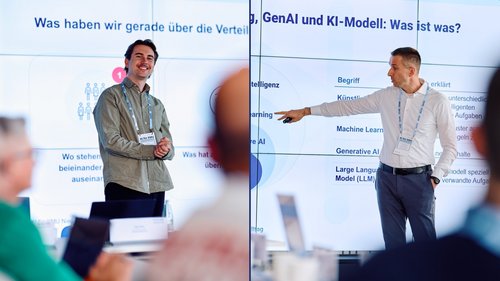 From Simple Prompt to Agent: Workshop Shows SMEs How AI Can Take Over Everyday Office Routines
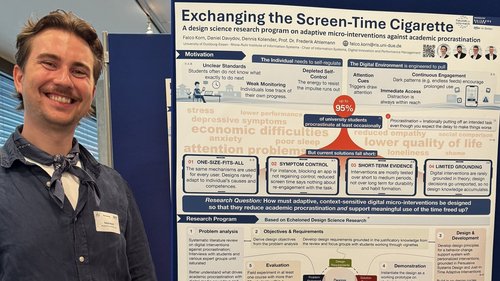 DIP Presents Research Program on Adaptive Micro-Interventions at Tag der Informatik
 Two New Papers and One Growing Collaboration for HICSS 2027
 First KI.READY Workshop on AI in Strategy Work
 Chair DIP to Deliver MasterClasses for CellPort Start-ups
- Vacant master thesis seeks to investigate and assess how municipal enterprises’ innovation culture influences the effectiveness of digital innovation activity
- One student project offered by the SITM chair in SS23
- Excellent evaluation results for the course tutorial of “Information Systems Research” in the winter semester of 2022/2023
- Chair for Information Systems and Strategic IT-Management requires a research aide
- Chair for Information Systems and Strategic IT-Management requires a student assistant